

Dark Passport: Turkey, Baskin and the Men Who Built Their Own Hell
Hell Doesn't Find You. You Find It.

Dark Passport is your quarterly deep dive into international horror, because sometimes the most interesting stories are whispered in different languages.
Each issue steps beyond borders to explore how a country’s history, power structures, and cultural memory shape the horror it creates (and what those stories quietly reveal about resilience, rebellion, and survival).
I’m Kimberly, your cultural translator, here to help you unpack international horror with depth…not just subtitles. If you’ve ever watched a foreign horror film and felt like you understood something you couldn’t quite name…this column is for that feeling.

Virtual Horror Tourism Guide: Welcome to Turkey
Turkey doesn’t make horror the way you expect it to. There are no elaborate creatures telegraphed from a mile away, no final girls sprinting through cornfields, no catharsis waiting at the end to let you off the hook. Turkish horror sits with you. It watches you eat. It waits until you’re comfortable - genuinely comfortable, laughing even - and then it opens a door you didn’t know was in the floor.
The country itself is built on thresholds. Literally. Istanbul straddles two continents. The Bosphorus doesn’t just separate Europe from Asia, it separates two ways of understanding the world, and Turkey has spent centuries being pulled in both directions without fully belonging to either.
That in betweenness isn't just geography. It gets into people. It shows up in the cinema as a specific kind of dread. The feeling that you’re never quite where you think you are, that the ground beneath a familiar space can shift without warning, that crossing from one room into another can be, under the right circumstances, irreversible.
Turkish horror is also deeply atmospheric in a way that rewards patience. The tension doesn’t spike, it accumulates. Long takes. Deliberate framing. Silences that run a second too long. Directors like Can Evrenol understand that the most disturbing thing isn’t what you show, it’s the space you build around what you’re about to show. By the time something terrible happens in a Turkish horror film, you’ve been living inside the dread so long it almost feels like relief.
Culturally across Turkey - above doorways, on jewelry, pinned to newborns, hanging from rearview mirrors - you’ll find a small blue and white glass eye. It’s called the nazar boncuğu. Most Westerners have seen it without knowing its name. The assumption is usually that it’s decorative, or that it’s a good luck charm. It’s neither.
The nazar exists because of a specific and serious belief that being seen - truly seen, at the wrong moment, by the wrong eyes - is one of the most dangerous things that can happen to a person. The evil eye isn’t about curses hurled by enemies. It’s about the weight of a gaze landing on you in a moment of pride, power, or exposed vulnerability. The amulet doesn’t attract good fortune. It deflects the cost of being visible.
Remember this. You’ll need to.
Movie Spotlight: Baskin (2015)
I want to tell you what Baskin did to me before I tell you what it’s about, because those are two different things.
It made me feel implicated. Not scared, implicated. Like I had witnessed something I wasn’t supposed to see, not because it was hidden from me, but because I stayed in the room when I should’ve looked away. This is a specific and rare achievement in horror. Most films want you to be afraid. Baskin wants you to sit with what you just watched these men do (to each other, long before anything supernatural arrives) and ask yourself whether what came for them was really so surprising.
The setup is almost mundane. Five Turkish police officers share a late dinner at a roadside restaurant. They joke. They tease each other. They perform the rituals of male camaraderie with the ease of men who’ve been doing it so long they’ve stopped noticing it’s a performance. There’s a pecking order at that table - invisible but heavy - and every laugh, every jab, every story told too loudly is a brick in its architecture.
Watch the youngest officer, Arda. Watch how carefully he navigates the room. Watch what it costs him to belong. The dinner scene is the horror, even before the horror starts. You just don’t know it yet.
A radio call sends them to a derelict building on the outskirts of a town that feels like it exists slightly outside of time. The building is dark. The backup they were sent to assist has gone silent. They go in anyway…because that is what men like this do. They go in because they’re armed and authorized and have never once considered that authorization might not be the same thing as protection.
The moment they cross that threshold, the film changes entirely. The building they arrive to stops making sense. The floor they came in on is gone. The building seems to rearrange itself. Rooms lead to rooms that shouldn’t exist. And somewhere below, something is waiting that has been waiting for a very long time.
The central figure they encounter - referred to in the film only as Father - is one of the most genuinely unsettling villains in recent horror, not because of what he does but because of what he represents. He isn’t chaos. He is order. A different order, older and more patient than the one these officers serve, but order nonetheless.
He moves through the film with the calm of someone who has seen this particular group of men before. Many times. In many forms. He’s not surprised by them. He has been expecting them. And the film’s most devastating implication is that they’ve been walking toward this room their entire careers. Every abuse of power, every unpunished cruelty, every moment they looked at someone smaller and chose not to look away…all of it was a step on a staircase they didn’t know they were descending.
Baskin isn’t a film about what’s waiting in the basement. It’s a film about what these men carried down with them.
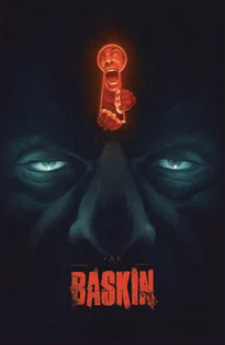
The Door Was Already Open
There’s a moment in Baskin - brief, easy to miss - where one of the officers hesitates at a threshold. He feels it. Something in him registers that crossing this particular line is different from the crossings that came before. And then he crosses anyway. Not from bravery. From habit. Because men like him have always crossed. Because nothing has ever stopped them before. That moment is the whole film in a couple of seconds.
What Baskin understands about Turkish horror - and about Turkish cultural logic more broadly - is that the universe isn’t indifferent. It’s patient.
The nazar doesn’t protect you from evil. It protects you from the moment you forget you can be seen.
These men forgot.
Keep reading with a 7-day free trial
Subscribe to Horror Concierge to keep reading this post and get 7 days of free access to the full post archives.